Air sealing services
Close the gaps that let air move through walls and ceilings - combines with wall insulation to give you both the thermal barrier and the air movement block in a single visit.
Learn more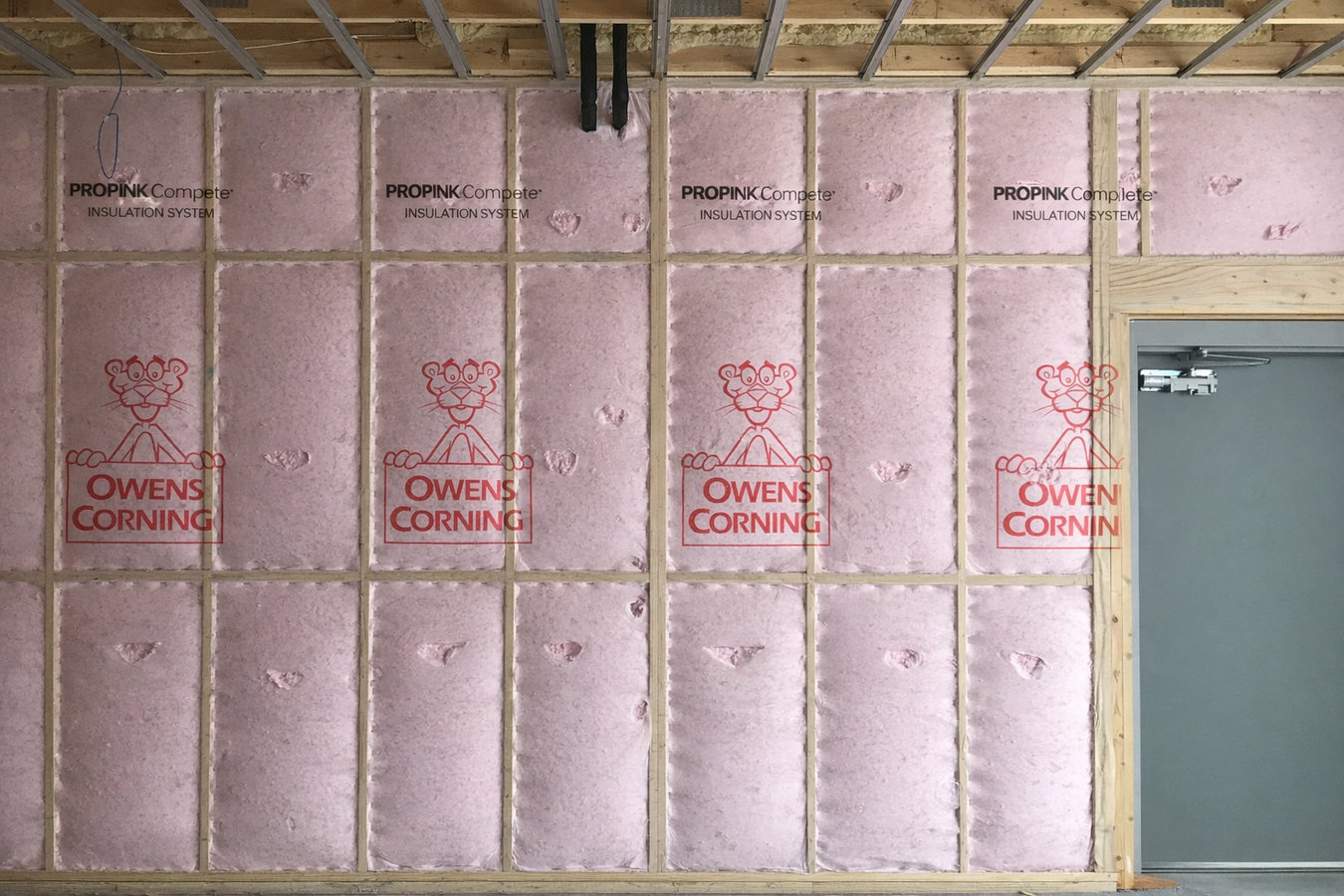
Older Missoula homes bleed heat through empty or degraded wall cavities. Wall insulation stops that loss, lowers your heating bills, and makes every room feel the same temperature.
Wall insulation in Missoula fills the cavities between your wall studs to slow heat transfer and reduce air movement - most homes are completed in a single day without opening walls. Unlike attic or crawl space work, wall insulation is invisible once finished, but you feel the difference on the first cold snap after the job is done.
Many Missoula homes - particularly in the University District, Rattlesnake, and South Hills - were built in the 1940s through 1970s with minimal or no wall insulation. Over time, even homes that had some insulation installed may have settled or degraded material that no longer performs. If your rooms never seem to reach a consistent temperature, or if your heating bill climbs every October regardless of what you set the thermostat to, your exterior walls are a strong place to start investigating - and wall insulation is one of the most cost-effective fixes available.
Wall insulation works best when paired with air sealing services- insulation slows heat transfer while air sealing closes the gaps that let air itself move through. Doing both in a single visit is the most efficient way to tighten your home's thermal envelope before winter.
If your gas or electric bill climbs sharply each November and stays high through March, heat is escaping through your walls. Missoula winters are long, and a home with thin or missing wall insulation can cost hundreds of dollars more per year to heat than a well-insulated home of the same size. Bills that feel out of proportion to your home's size are one of the clearest signals.
On a cold Missoula morning, press your hand flat against an interior wall surface. If it feels significantly colder than the air in the room, heat is moving through that wall much faster than it should. Well-insulated walls feel close to room temperature even when it is well below freezing outside.
Electrical outlets and light switches on exterior walls are small windows into your wall cavity. If you feel a cold draft coming through them in winter, it is a sign the wall behind them has little or no insulation. This is one of the easiest self-checks you can do without any tools.
Missoula's prevailing winter winds come from the north and west, and rooms on those sides of the house take the brunt of the cold. If one or two rooms always feel harder to heat no matter how high you set the thermostat, the wall insulation on those exposures may be thin, settled, or missing entirely.
The most common approach for existing Missoula homes is blown-in wall insulation - tiny fibers or pellets blown into the wall cavity through small holes drilled in your siding or drywall. The holes are patched cleanly after the work is done, and most homeowners cannot tell where they were once the walls are painted. This method works especially well for the older wood-sided homes throughout Missoula's neighborhoods because it fills irregular spaces that pre-cut batts would leave empty. We also install batt insulation during renovations or when walls are already open, and we pair every wall project with a discussion of blown-in insulation options so you understand the tradeoffs before we start.
For homes where air movement through walls is as much of a concern as heat transfer, we also recommend combining wall insulation with air sealing services. Sealing the gaps around pipes, wiring, and framing before or alongside the insulation installation gives you the full benefit - you get both the thermal barrier and the air movement block working together. We coordinate both scopes of work in a single visit whenever possible.
Best for existing homes where you want to avoid opening walls. Small holes are drilled, insulation is blown in, and holes are patched - minimal disruption.
Best for renovations or new construction where walls are already open. Pre-cut fiberglass or mineral wool batts fit between studs for fast installation.
Best for homes with settled or degraded existing insulation. Dense-pack fills every void and resists future settling, giving you durable long-term performance.
Best for older Missoula homes with both heat loss and air movement problems. Combining insulation with sealing in one visit saves labor cost and maximizes results.
Missoula sits in one of the colder climate zones in the country, which means the recommended insulation levels here are higher than in most U.S. cities. The federal government classifies this region as a very cold climate, and a large share of Missoula's housing stock - particularly the craftsman bungalows and wood-frame homes built from the 1940s through the 1970s in neighborhoods like the University District and the Rattlesnake - were constructed well before those recommendations existed. Many of those homes have walls that were never insulated, or contain material that has compressed and degraded over decades of hard Montana winters. If your home falls into this category, you are paying to heat the outdoors every single month from October through March. According to the U.S. Department of Energy, properly insulating and air-sealing your home can reduce heating and cooling costs meaningfully - and in a valley climate where the heating season runs for five or six months, that adds up fast.
Missoula's valley geography also creates a secondary benefit that most homeowners in other cities do not think about: air quality. Winter temperature inversions trap wood smoke and vehicle exhaust at ground level, and a well-insulated, air-sealed home keeps more of that outdoor pollution outside. Homeowners in Missoula and surrounding communities like Hamilton benefit from this in a way that homeowners in milder, cleaner-air cities simply do not. A tighter wall assembly keeps the heat in and the smoke out at the same time.
We will ask about your home's age, size, and what is prompting the call - whether that is high bills, cold rooms, or something else. You will hear back within 1 business day to schedule your in-home visit. There is no charge for the estimate.
A technician walks through your home, checks wall conditions, and may use a thermal camera or probe to see what is inside the cavities without opening walls. You leave with a written estimate that breaks down cost by area - no pressure to sign on the spot.
Before the crew arrives, move furniture a few feet away from exterior walls and clear paths to the work areas. You do not need to vacate your home. The crew covers floors and furniture near the work to protect them from dust.
The crew drills small holes, blows insulation into each wall cavity, and patches every hole before they leave. Most single-story homes are done in one day. We walk you through NorthWestern Energy rebate paperwork before we go so you are not chasing it later.
No pressure, no obligation. We assess your walls, give you a written estimate, and let you decide what to do with the information. Most homeowners get their estimate within a week.
(406) 550-8187We pull permits whenever the scope of work requires it, and permitted work gets inspected and recorded. That documentation protects your home's value when you sell.
We use thermal imaging to confirm insulation coverage after the work is done. You can see exactly where heat is still moving and where it is not - no gaps left undetected. It is the difference between knowing the job was done right and hoping it was.
Homes in the University District, Rattlesnake, and South Hills neighborhoods were built decades before modern insulation standards existed. We have worked in these homes and know the wall construction common to each era - so we come prepared for what we will find.
We help every qualifying customer submit their NorthWestern Energy rebate paperwork before we leave the job. You should not have to chase that money on your own. Federal energy efficiency tax credits may also apply, and we can point you to the right documentation.
Wall insulation is work you cannot see once it is finished - which is exactly why verification matters. We use thermal imaging to confirm the job was done correctly, and we provide documentation you can keep for your records, useful if you sell the home or want to claim a tax credit. The North American Insulation Manufacturers Association sets quality and installation standards for the industry - we follow them on every job.
Close the gaps that let air move through walls and ceilings - combines with wall insulation to give you both the thermal barrier and the air movement block in a single visit.
Learn moreThe same blown-in technique used for walls also works for attics and floors - learn how the material and process work across different parts of your home.
Learn moreContractors in Missoula fill up fast from August through October. Call or send a message now to lock in your date and have warmer walls before the first cold snap of the season.