
Vapor barrier installation
A broader look at vapor barrier options for crawl spaces and basements, including full encapsulation approaches for homes with more serious ongoing moisture conditions.
Learn more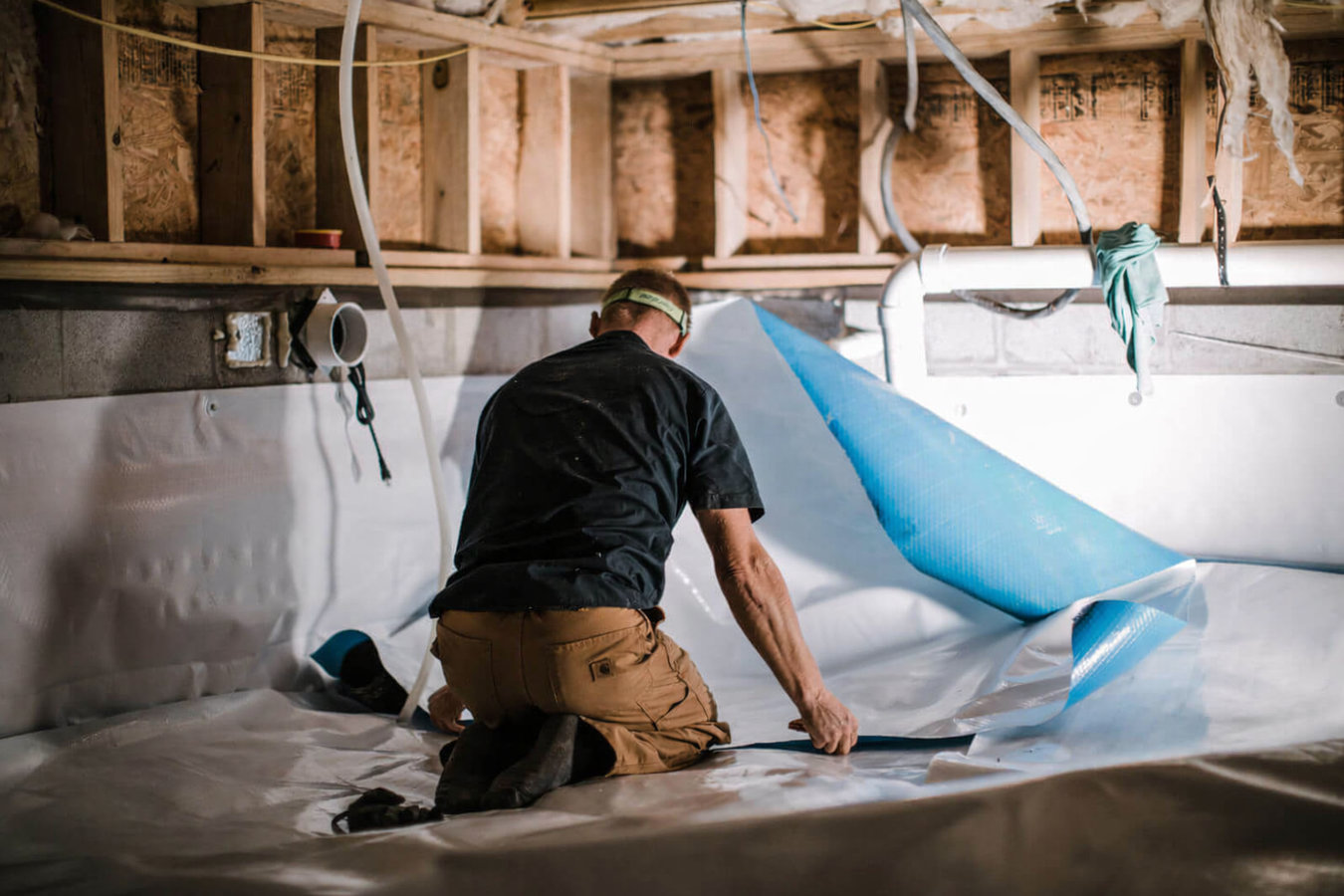
Ground moisture rising through a bare-dirt crawl space quietly damages your floor framing and drives up heating costs. A vapor barrier stops it at the source.
Crawl space vapor barrier installation in Missoula means covering the bare soil under your home with heavy-duty polyethylene sheeting, sealing every seam, and running the edges up the foundation walls to block ground moisture from rising into your floor framing - most jobs are complete in one to two days. Without it, moisture moves upward through the soil year-round and accelerates in spring, when Missoula's snowpack melts and saturates the valley floor. That rising moisture damages wood joists, degrades insulation, and creates the musty smell that many Missoula homeowners have learned to live with - but do not have to. The U.S. Department of Energy identifies crawl space moisture control as one of the most effective steps a homeowner can take to protect their home's structure and reduce heating costs.
In Missoula, where a large share of homes were built before vapor barriers were standard practice, this is one of the most common improvements we make to older properties. If you are already dealing with moisture in your crawl space, pairing a vapor barrier with crawl space insulation addresses both the moisture source and the heat loss in a single project.
If you notice a damp, earthy odor every year when Missoula's snow starts melting, that is a strong sign moisture is rising from your crawl space. The smell often fades by midsummer, which is why many homeowners put it off - but the damage to wood framing and insulation is happening whether you can smell it or not.
If certain areas of your floor feel noticeably colder than others during Missoula's long winters, or if you notice any slight give when you walk, moisture may already be affecting the wood underneath. Wet insulation loses most of its ability to hold heat, and soft spots can mean the floor framing itself has started to weaken.
Water droplets forming on pipes, metal ducts, or the underside of the floor in your crawl space are moisture in the air condensing on cold surfaces - exactly what a vapor barrier is designed to prevent. Left alone, that condensation feeds mold growth and speeds up rust on metal components throughout the space.
A large share of Missoula's housing stock was built before vapor barriers were standard practice. If your home dates from the 1950s, 60s, or 70s and you have never had the crawl space inspected, bare soil may have been releasing moisture under your floors for decades. You do not need visible symptoms to have a real problem here.
We install heavy-duty polyethylene barriers across the entire crawl space floor - not just the easy-to-reach areas. Every seam is overlapped and taped, and the edges are run up the foundation walls and secured so moisture cannot sneak underneath at the perimeter. We use 10 to 20 mil material as our standard because Missoula's older crawl spaces see real wear from plumbers, HVAC technicians, and pest control crews over the years, and thinner material does not hold up. For homes with especially tight clearance - common in the University District and similar older neighborhoods - we have the tools and experience to work in low-headroom spaces without cutting corners on sealing.
We also offer full crawl space encapsulation for homeowners with more serious moisture conditions - sealing the foundation walls in addition to the floor and, where needed, pairing that work with a vapor barrier installation that addresses every exposed surface. For homeowners who want to address their full building envelope, vapor barrier work pairs naturally with crawl space insulation so moisture is blocked and heat is retained in a single project.
Best for most Missoula homes with moderate moisture concerns - covers the full crawl space floor with thick, durable sheeting, all seams taped and edges secured to the foundation walls.
Suited for homes with high water tables, significant seasonal moisture, or existing mold concerns - extends coverage up the foundation walls and seals the entire crawl space environment.
For crawl spaces where existing insulation has been compromised by moisture - we remove the damaged material, install the barrier, and replace insulation in sequence.
Ideal for homeowners who want to address moisture and heat loss together - the barrier goes in first, then insulation is added so both problems are resolved in a single visit.
Missoula sits in a mountain valley where the Clark Fork River and its tributaries create consistently high ambient humidity near the valley floor. Parts of the city - particularly neighborhoods close to the river and in lower-lying areas - sit on soils with elevated water tables, meaning moisture does not just rise slowly through dry soil but can pool under a home after heavy rain or snowmelt. Missoula's spring thaw is concentrated and intense: the mountains surrounding the city hold significant snowpack through winter, and when that melts in April and May, a large volume of water moves through the soil quickly. The EPA and building scientists consistently identify moisture intrusion as the primary driver of mold growth and structural wood decay in homes - and Missoula's valley geography makes that pressure higher than in drier parts of Montana.
A large share of Missoula's residential neighborhoods were built in the 1940s through 1970s, when vapor barriers were simply not part of standard construction. If your home is from that era and has never had crawl space work done, there is a good chance bare soil has been releasing moisture under your floors for decades. There is also a secondary benefit specific to Missoula: a sealed crawl space reduces how much outdoor air - including the smoke and particulates trapped during winter valley inversions - can infiltrate your home from below. We serve homeowners across the valley, including Missoula proper and nearby Hamilton.
Reach out by phone or through our contact form. We will ask basic questions about your home's age, whether you have noticed any odors or soft spots, and whether you know the current condition of your crawl space. You will hear back within 1 business day to schedule a visit.
A contractor visits your home and physically inspects the crawl space - checking moisture levels, existing insulation, access points, and floor area. This visit takes 30 to 45 minutes and results in a written estimate you can compare at your own pace. No commitment required on the spot.
The crew lays sheeting across the full crawl space floor, cutting it to fit around piers, pipes, and posts. Every seam is overlapped and taped. Edges are secured up the foundation walls. Most jobs finish in a single day - your routine stays normal throughout.
When the work is done, we walk you through what was installed and provide photos of the finished crawl space. You get documentation of the work for your records - useful if you ever sell the home. Musty odors typically begin to fade within a few weeks as the space dries out.
No pressure, no obligation. We will come out, inspect your crawl space, and give you a written estimate with no surprises - so you can decide at your own pace.
(406) 550-8187Missoula's freeze-thaw cycles and spring snowmelt put real pressure on crawl space barriers. We use 10 to 20 mil polyethylene as our standard - significantly thicker than the minimum - because thinner material tears under foot traffic and does not last through repeated Missoula winters.
Every vapor barrier project we complete in Missoula comes with a written record of the material used and the area covered. You get a clear reference for the work if any question comes up later.
We have worked in crawl spaces throughout Missoula's older neighborhoods - University District bungalows with under-two-foot clearance, riverside homes dealing with high water tables, and hillside properties in the South Hills. That direct experience means we know what conditions to expect before we arrive.
Every job we complete has overlapped and taped seams and edges run up the foundation walls - not just sheeting laid loose on the dirt. A barrier with gaps at the edges or unsealed seams lets moisture back in within a season. We document the finished installation with photos for your records.
A vapor barrier is only as good as the quality of the installation. Choosing a contractor with verified credentials, documented experience in Missoula's specific housing stock, and a commitment to thick materials and proper sealing is what separates a barrier that lasts 20 years from one that fails in two. Read more about moisture control standards from the Building Science Corporation, a leading research organization focused on how buildings manage moisture.
A broader look at vapor barrier options for crawl spaces and basements, including full encapsulation approaches for homes with more serious ongoing moisture conditions.
Learn moreAddress heat loss and cold floors in the same project by adding insulation to the crawl space walls or floor joists after the moisture barrier is in place.
Learn moreApril and May bring the highest moisture pressure of the year to Missoula crawl spaces. Getting your barrier installed in late winter means your home is protected before the melt peaks - call or send a message now to get on the schedule.