
Open-cell foam insulation
When you need insulation in attic cavities or interior walls where moisture is not a factor, open-cell foam delivers strong thermal and soundproofing performance at a lower cost per square foot.
Learn more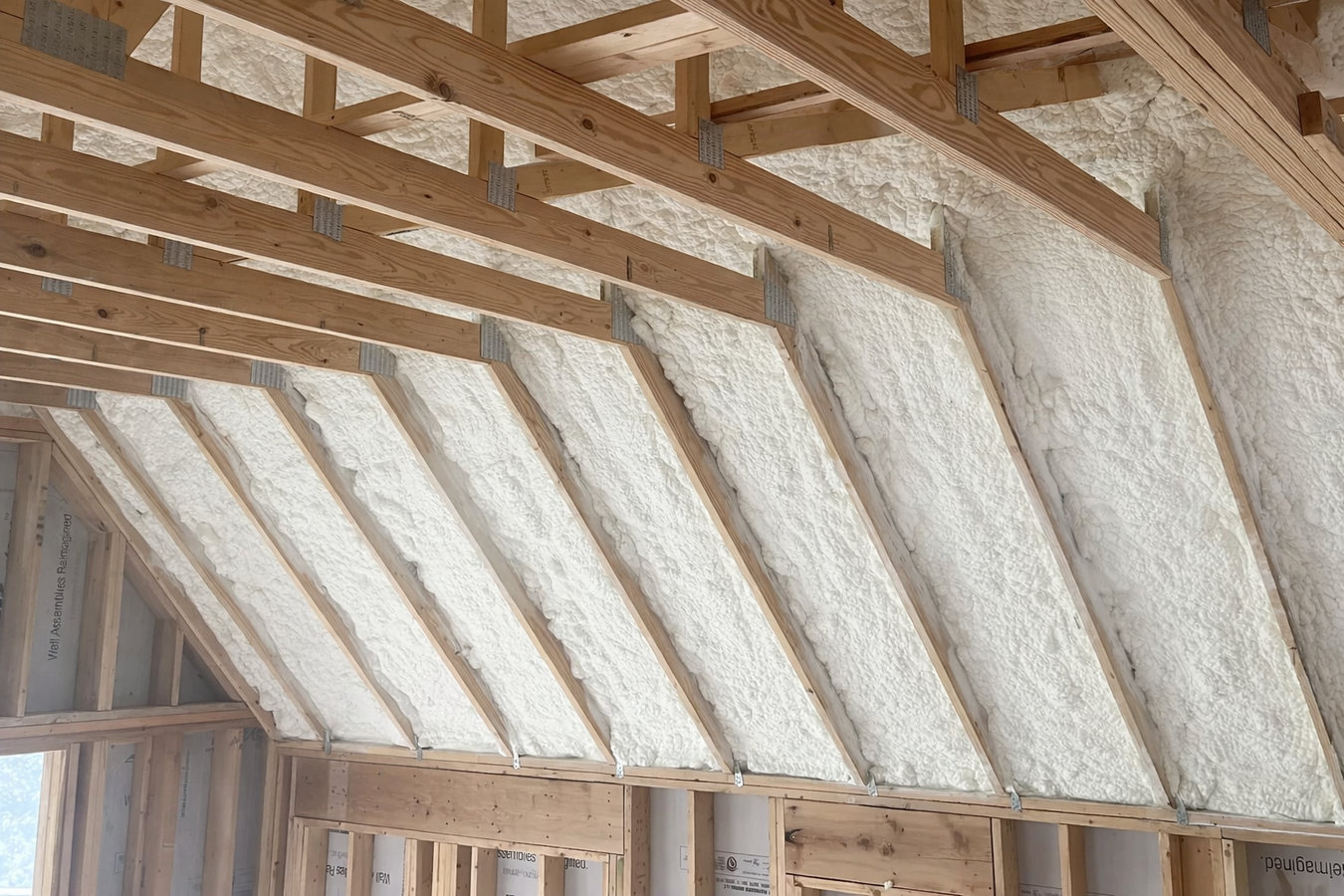
Cold floors, drafts, and smoke intrusion all point to the same problem - gaps in your building envelope. Closed-cell foam seals and insulates in one step, with the highest R-value per inch of any common material.
Closed-cell foam insulation in Missoula expands into a rigid, dense layer that insulates, air-seals, and resists moisture in a single application - most crawl space or rim joist jobs are complete in a single day. Unlike fiberglass batts, it does not shift or sag, and unlike loose-fill cellulose, it forms a continuous barrier against both heat loss and air movement. It also delivers roughly twice the insulating value per inch of fiberglass, which matters in tight spaces where thickness is limited.
In Missoula's climate, the combination of cold air pooling in the Clark Fork Valley during winter inversions and spring moisture from snowmelt makes closed-cell foam a particularly strong fit for crawl spaces, rim joists, and below-grade foundation walls. Homes built in Missoula before the 1980s - the University District, Rattlesnake, and South Hills neighborhoods - were often built with insulation that has long since degraded or was never adequate to begin with.
For homeowners considering a full-envelope upgrade, closed-cell foam pairs well with open-cell foam insulation in attic cavities and interior walls where moisture exposure is lower and soundproofing is a priority alongside thermal performance.
If you walk across your kitchen or living room floor in winter and it feels cold through your socks despite the thermostat being set comfortably, your crawl space or floor system is losing heat fast. In Missoula's valley climate, cold air pools at ground level during inversions and sits directly under your crawl space. This is one of the most common complaints from homeowners in older Missoula neighborhoods, and it is one of the clearest signals that closed-cell foam in the crawl space would help.
If your natural gas or electric bill keeps climbing but your usage habits have not changed, your home's insulation may be losing effectiveness. Older fiberglass batts compress and settle over time, and gaps that were not there 20 years ago can open as a house shifts. In Missoula, where furnaces run for five or six months straight, even a modest improvement in your home's thermal performance shows up clearly on your utility bill.
If you close all your windows during a smoke event and still notice the smell indoors, your home has air leakage points letting outdoor air in. Missoula's smoke seasons have become more intense in recent years, and a home that is not well-sealed pulls in smoky air through gaps in the foundation, attic, and wall penetrations. If this is your experience, your home's air sealing needs attention - and closed-cell foam addresses both the insulation and the air sealing at once.
Hold your hand near an electrical outlet on an exterior wall on a cold January day. If you feel cool air, that is a sign air is moving through your wall cavity from outside. The same applies to drafts near baseboards or around window frames. These are exactly the gaps that closed-cell foam is designed to seal permanently.
We apply closed-cell foam to crawl spaces, rim joists, attic roof decks, basement foundation walls, and exterior wall cavities. The right application location depends on your home's construction, current insulation conditions, and what problems you are trying to solve. For most older Missoula homes, the crawl space and rim joist together are the highest-priority targets - they are where the most heat escapes and where moisture exposure is highest. Spray foam insulation covers the full range of foam applications, including open-cell options for areas where rigid foam is not needed.
Every project starts with an on-site assessment. We measure the space, check for moisture and existing damage, and confirm the correct thickness for Montana's climate zone requirements before any material is mixed. We also coordinate permits with the City of Missoula Development Services when the scope of work requires it, and we provide documentation of materials used - useful for federal energy tax credit claims.
Best for Missoula homes on crawl space foundations where cold floors, frozen pipes, and valley cold-pooling are recurring winter problems.
Targets the framing band where your floor system meets the foundation wall - the single largest uninsulated air leak point in most older Missoula homes.
Suits homes where moisture exposure from snowmelt and spring runoff makes a vapor-resistant material critical alongside insulation value.
Right for unvented attic assemblies and low-slope roofs where high R-value per inch is required in tight rafter bays.
Missoula's mountain valley location creates two problems that push homeowners toward closed-cell foam over conventional materials. First, the Clark Fork Valley's winter temperature inversions trap cold air at ground level - the air directly around your foundation can be several degrees colder than outdoor air at roof height, making ground-floor insulation more critical here than in flat-terrain cities. Second, spring snowmelt from the surrounding mountains raises groundwater around older foundations every year, and any insulation material used in crawl spaces and basements here needs to handle that moisture exposure without degrading. Closed-cell foam handles both conditions better than fiberglass or open-cell alternatives. According to the Spray Polyurethane Foam Alliance, properly installed closed-cell foam does not absorb moisture and retains its insulating value even in high-humidity environments.
Missoula's increasingly severe wildfire smoke seasons add another layer to the value of a well-sealed home. A home where closed-cell foam has sealed the crawl space, rim joist, and foundation penetrations keeps outdoor air out more effectively - reducing smoke infiltration during late-summer events that have become a regular part of life in the valley. We serve homeowners throughout the region, including Missoula proper and Polson, where valley geography and older housing stock create similar conditions. You can check available state energy efficiency programs through the Montana Department of Environmental Quality Energy Office.
We ask about your home's age, the areas you want treated, and what problems you have noticed - cold floors, drafts, smoke infiltration, or high bills. You will hear back within 1 business day to schedule your on-site visit.
A technician walks the crawl space, rim joists, or other areas being considered. We check for moisture and existing damage, measure the space, and give you a written estimate with a breakdown by area and material. No commitment required to receive a quote.
Clear the work area of stored items before the crew arrives. Because closed-cell foam releases fumes while curing, you and your family - including pets - need to be out of the home for at least 24 hours after spraying. We give you the exact re-entry time in writing before work begins.
The crew applies foam in passes to the required thickness. Most crawl space and rim joist jobs are complete in a single day. Before leaving, we walk you through the finished work so you can see coverage yourself and ask questions. Documentation of materials is provided for any tax credit claims.
No sales pressure, no obligation. We walk your space, give you a written quote, and answer every question. You decide what - if anything - to move forward with.
(406) 550-8187We check every crawl space, attic, and wall cavity for moisture, existing damage, and access conditions before a drop of foam is applied. Spraying over wet or damaged surfaces traps moisture and creates long-term problems. That assessment step is not optional - it is how we protect your investment.
Our installers hold training credentials through the Spray Polyurethane Foam Alliance, the national trade body for spray foam contractors. Proper technique - correct temperature, correct mixing ratio, correct thickness - is what separates foam that performs from foam that fails. You can verify SPFA standards at sprayfoam.org.
We have installed closed-cell foam across Missoula's older neighborhoods - University District, Rattlesnake, South Hills - where crawl space foundations and tight rim joists are common. That local experience means we know how to access and treat these spaces efficiently without surprises on installation day.
You receive a written scope of work and re-entry time before the crew arrives - not after. You know exactly what areas are being treated, at what thickness, and how long you need to plan to be out. No guessing, no day-of surprises.
Spray foam done correctly lasts the life of the home without replacement. Spray foam done poorly fails within a few years and can trap moisture in the process. The difference is technique, training, and the willingness to do a proper site assessment first. We walk you through our approach and the products we use upfront, so you know exactly what to expect before work begins.
When you need insulation in attic cavities or interior walls where moisture is not a factor, open-cell foam delivers strong thermal and soundproofing performance at a lower cost per square foot.
Learn moreSee the full range of spray foam applications for Missoula homes, including open-cell and closed-cell options selected by location and the specific problem each area of your home presents.
Learn moreMissoula crews book up fast once temperatures drop in fall - getting your estimate on the calendar now means the work is done before the first hard freeze, not after. Call or send a message to get started.