
Retrofit insulation
After the moisture barrier is in place, upgrade the insulation in your walls, crawl space, or attic to stop heat loss - often scheduled as a single project for maximum efficiency.
Learn more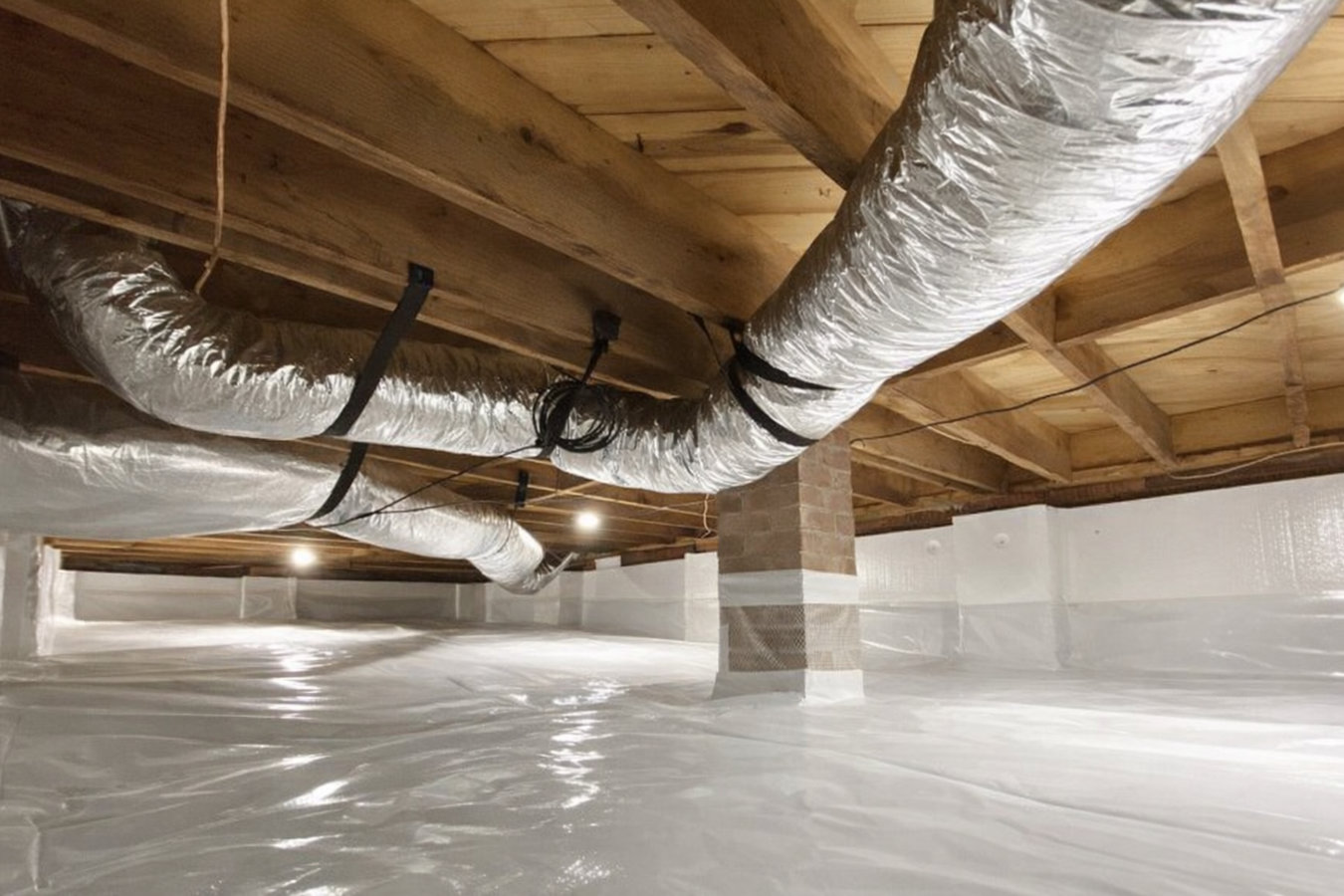
Ground moisture rising through a bare crawl space damages floor framing, degrades insulation, and drives up heating costs. Vapor barrier installation stops it permanently.
Vapor barrier installation in Missoula means laying heavy-duty plastic sheeting across the bare soil in your crawl space, sealing every seam, and securing the edges to the foundation walls to permanently block ground moisture from rising into your home's structure - most jobs on a standard single-family home are complete in one day. Think of it as a raincoat for the underside of your house. Without it, moisture from the ground moves upward year-round through a process called vapor diffusion - and that process accelerates sharply every spring when Missoula's snowpack melts and the valley floor saturates. The U.S. Department of Energy identifies ground moisture as one of the leading causes of reduced insulation performance, mold growth, and premature wood decay in residential homes.
In Missoula, where a large portion of homes were built before vapor barriers were standard practice and the valley climate creates consistent moisture pressure, this is one of the most impactful improvements an older-home owner can make. Many homeowners combine vapor barrier installation with retrofit insulation upgrades to address moisture and heat loss in the same project - stopping the problem at the source before adding or replacing insulation on top.
If your home develops a damp, earthy odor in April or May and fades by midsummer, that is a strong sign that Missoula's snowmelt is pushing moisture up through your crawl space. The seasonal pattern makes it easy to dismiss, but that moisture is actively working on your floor framing and insulation even when you cannot smell it anymore.
Walk slowly across your wood floors and pay attention to any spots that feel softer than the rest or flex slightly underfoot. Persistent moisture from below causes the wood framing and subfloor to absorb water over time, weakening the structure. This is especially common in Missoula homes built before 1980, where bare soil may have been releasing moisture for decades.
If you have ever looked into your crawl space and seen water droplets on pipes or ducts, dark spots on wood joists, or a white chalky crust on the concrete foundation walls, moisture is already doing damage. The chalky residue - mineral deposits left as water evaporates - is a reliable sign that water is moving through the concrete and needs to be blocked at the source.
Cold, damp air rising from an unprotected crawl space fights your furnace all winter long. If your floors feel noticeably cold even with the heat running, or if your heating bills have climbed without a clear reason, moisture-compromised insulation underneath may be part of the problem. In Missoula's long heating season, that extra work shows up on your gas or electric bill every month.
We install vapor barriers using heavy-duty polyethylene material - 10 to 20 mil as our standard for Missoula homes - because thinner material punctures under the routine foot traffic that happens every time a plumber or HVAC technician needs to access the space. Every piece of sheeting is cut to fit precisely around piers, pipes, and posts. Seams are overlapped by at least 12 inches and taped with vapor barrier tape. Edges run up the foundation walls and are fastened in place so moisture cannot work its way underneath at the perimeter. No gaps, no loose edges, no shortcuts.
For homes where the crawl space has standing water history, significant mold, or damaged insulation, we address those conditions first before the barrier goes down. We also pair vapor barrier work with crawl space vapor barrier encapsulation - extending coverage up the foundation walls for the most complete moisture control approach. For homeowners who want a full building envelope upgrade, we sequence vapor barrier installation with retrofit insulation so moisture is sealed out before any new insulation goes in.
Best for most Missoula homes with moderate moisture concerns - heavy-duty sheeting across the full crawl space floor with all seams taped and edges secured to the foundation walls.
Suited for homes with ongoing high moisture or high water table conditions - extends the barrier up the foundation walls for a complete sealed environment under the home.
For crawl spaces that already show mold or moisture damage on the framing - we address the existing damage before installing the barrier so the problem does not continue underneath.
Ideal for older Missoula homes that need both moisture control and improved insulation - barrier installed first, then insulation added in sequence for a complete upgrade.
Missoula's mountain valley location creates a combination of moisture conditions that make vapor barrier installation more consequential here than in drier parts of Montana. The city sits in a low-lying valley surrounded by mountains that hold substantial snowpack through winter - and when that snowpack melts in April and May, a concentrated surge of water moves through the soil under every home in the valley. Neighborhoods close to the Clark Fork River and its tributaries also deal with naturally elevated water tables, meaning moisture pressure can come from the sides as well as from below. Add to that Missoula's ambient humidity - higher than many western cities due to the river corridor that runs through the city - and you have conditions that make bare-dirt crawl spaces a consistent problem for the housing stock. The ENERGY STAR program and the City of Missoula Building Services both recognize moisture control as a foundational component of home energy performance and structural durability.
A significant share of Missoula's homes were built in the 1940s through 1970s - well before vapor barriers were a standard part of residential construction. That means if your home is from that era and has never had crawl space moisture work done, the floor framing has been exposed to ground moisture for decades. The good news is that installing a proper barrier stops the problem immediately and protects the structure going forward. We serve homeowners throughout the region, including Missoula proper and nearby Hamilton.
Reach out by phone or through our contact form. We will ask a few quick questions about your home's age, whether you have noticed any odors or soft floors, and what access to the crawl space looks like. You will hear back within 1 business day to schedule a site visit.
A contractor comes out and physically goes under your home to check the current conditions - moisture levels, any existing damage, how easy the space is to work in, and the total square footage. This visit is free and results in a written estimate you can compare at your own pace, with no pressure to commit on the spot.
The crew enters the crawl space, clears any loose debris, and lays the sheeting across the entire floor - cutting it precisely around piers, pipes, and posts. All seams are overlapped and taped. Edges are secured to the foundation walls. Most standard jobs are complete in a single day.
When the work is done, we walk you through what was installed and provide photos for your records. Any debris is removed from your property. You will have documentation of the completed work - which matters when buyers and inspectors look at older Missoula homes during a future sale.
No pressure, no commitment. We will inspect your crawl space, explain exactly what we find, and give you a written estimate - so you can make the right decision for your home and your budget.
(406) 550-8187We use 10 to 20 mil polyethylene as our standard for Missoula homes - thicker than the minimum required anywhere - because older crawl spaces see real wear from contractors accessing them over the years. Every seam is taped and every edge is secured to the foundation wall. A barrier with gaps is no barrier at all.
We handle any required permits and photo-document every job, so you get a written record of the work. That paper trail protects your home's value when you sell.
We have installed vapor barriers throughout Missoula's older neighborhoods - low-clearance University District bungalows, riverside homes with elevated water tables, and hillside properties in the South Hills. That direct experience with this city's housing stock means fewer surprises and better results on your specific home.
When the work is done, we photograph the finished installation and share those photos with you. That documentation gives you a baseline for future inspections and a record of completed work that buyers and their inspectors will appreciate - particularly on older Missoula homes where crawl space condition is a common concern.
Getting a vapor barrier right requires more than purchasing the right material - it requires the experience to seal every edge, tape every seam, and handle the obstacles that every crawl space presents. Our experienced crews, documented track record in Missoula's older housing stock, and commitment to photo-documenting every job give you the accountability most homeowners want but rarely get.
After the moisture barrier is in place, upgrade the insulation in your walls, crawl space, or attic to stop heat loss - often scheduled as a single project for maximum efficiency.
Learn moreA focused look at crawl space vapor barrier options, including full encapsulation for homes in Missoula neighborhoods with elevated water tables or high seasonal moisture.
Learn moreLate winter is the right time to act - get your barrier in place before April snowmelt pushes moisture through every unprotected crawl space in the valley. Call or send a message now and we will get you on the schedule.