Closed-cell foam insulation
When foundation walls and rim joists need the strongest performance per inch, closed-cell foam delivers both insulation and a built-in vapor barrier in a single application.
Learn more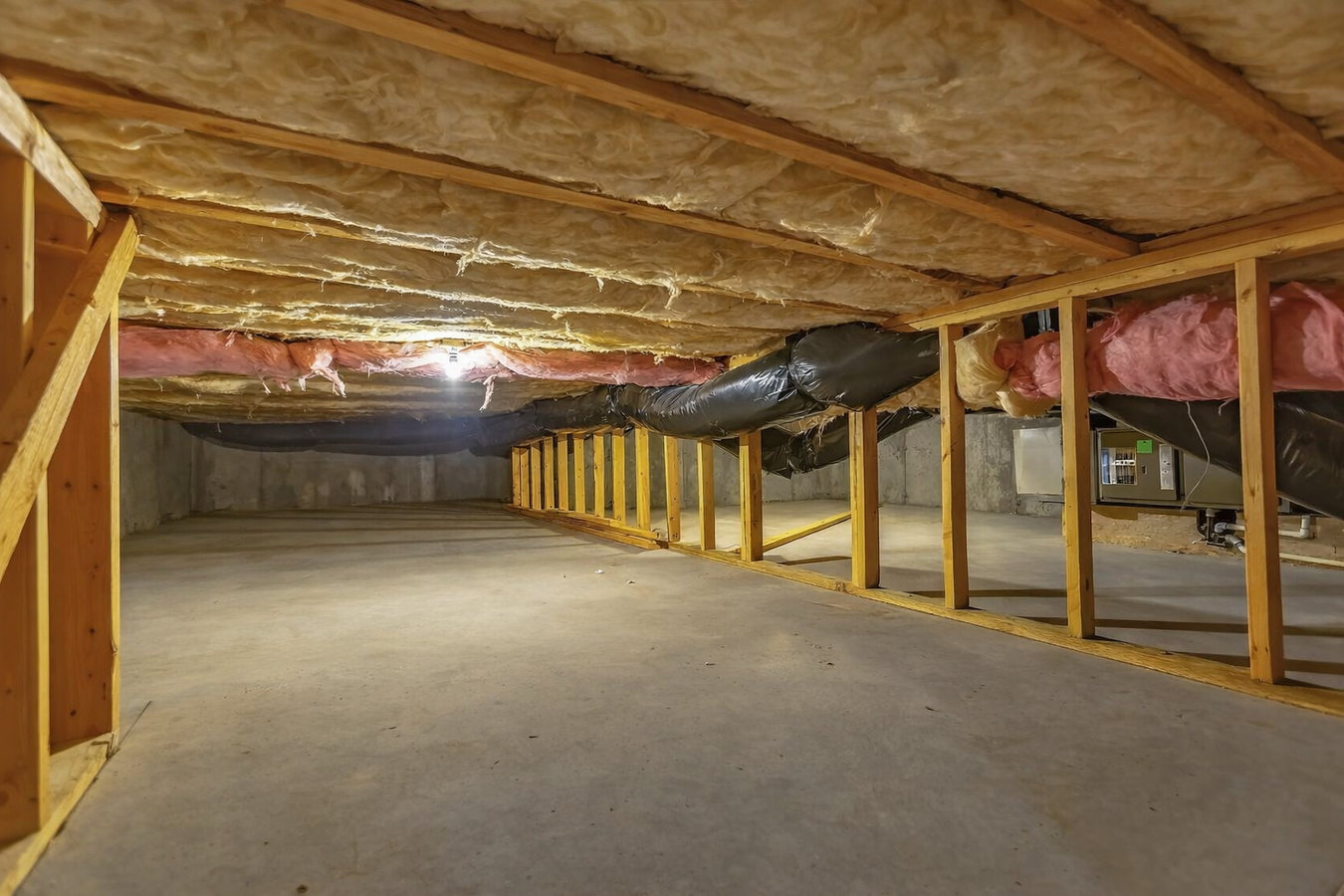
Cold floors, frozen pipes, and heating bills that climb all winter are signs your basement is uninsulated. We fix that - with the right material for Missoula's cold, wet conditions.
Basement insulation in Missoula stops heat from escaping through your foundation walls and floor system, keeping rooms above warmer and reducing the strain on your furnace - most projects are complete in one to two days. The work targets the places where cold air enters and warm air escapes: foundation walls, the rim joist framing where the floor meets the foundation, and in some cases the basement ceiling itself.
A large share of Missoula's housing stock was built in the 1940s through 1970s, when basement insulation was minimal or nonexistent. If you live in an older neighborhood near the University of Montana or in the Rattlesnake area, your basement is likely one of the biggest sources of heat loss in your home. Cold floors above are the most common complaint - and they are almost always fixable with the right insulation.
Many homeowners pair basement work with crawl space insulation to address the full lower level of the home at once - a practical approach when both spaces are contributing to cold floors and high heating bills.
If the floors in your kitchen, living room, or hallway feel cold underfoot during Missoula winters despite the heat running, cold air is rising from an uninsulated basement below. This is especially common in the city's older neighborhoods where the gap between the foundation wall and the floor framing above is often left bare. It is one of the clearest signals that your basement is costing you both comfort and money.
Missoula's heating season is long and cold. If your gas or electric bill climbs far more than you would expect given the temperature outside, your basement may be a major culprit. An uninsulated basement wall or floor-ceiling can account for a significant portion of your home's total heat loss. Comparing usage to neighbors with similar homes can help you gauge whether yours is unusually high.
If a pipe has frozen in your basement during a cold snap - or a plumber has warned you they are at risk - the space is not adequately protected from the cold. Missoula temperatures can drop to single digits or below for stretches, and uninsulated foundation walls leave plumbing vulnerable. Proper insulation around the basement perimeter is one of the most direct ways to protect your pipes.
When Missoula's snowpack melts in March and April, moisture levels in the soil around foundations rise. A damp or musty smell in your basement during that period, or condensation beading on walls, is worth having assessed before any insulation work begins. Insulating over a moisture problem traps it and makes it worse - catching it early protects both your home and your investment.
We work with spray foam, rigid foam board, and fiberglass batts - and the right choice depends on your basement's use, its current moisture conditions, and how much space you have to work with. Closed-cell foam insulation is the strongest performer for foundation walls and rim joists - it insulates, air-seals, and acts as a vapor retarder in one application. Rigid foam board is a durable, moisture-resistant option that works well on flat foundation walls and is easier to combine with finished wall assemblies. Fiberglass batts are appropriate for insulating the basement ceiling when the goal is simply to keep the floor above warm without conditioning the basement itself.
Every project begins with an in-person assessment. We check existing conditions, look for moisture or water intrusion, and confirm what material and R-value is appropriate for your specific basement layout and Montana's climate requirements. We coordinate permits with the City of Missoula Building Division when the scope of work calls for it.
Best for finished or semi-finished basements and homes where pipe protection from the cold is a priority.
Targets the band of framing at the top of the foundation wall - one of the single largest air leak points in older Missoula homes.
Right for unheated storage basements where the primary goal is keeping the rooms above warm, not conditioning the basement itself.
Suits older Missoula homes where foundation framing has gaps and irregular surfaces that batts and boards cannot fully cover.
Missoula sits in a mountain valley where cold air pools at ground level during winter inversions - a pattern that happens regularly from November through March. That means the air immediately around your home's foundation is often significantly colder than the air a story above it. Uninsulated foundation walls act as a direct pathway for that cold into your living space, and an uninsulated rim joist is one of the most leaky points in any older home. The U.S. Department of Energy recommends basement insulation as one of the highest-priority upgrades for homes in cold climates like Montana's.
Missoula also deals with snowmelt pressure on foundations every spring, when mountain runoff raises groundwater levels around older homes. Moisture concerns are real here - which is why every basement project we do starts with a moisture check. We serve homeowners throughout the area, including in Missoula proper and in Hamilton, where many homes share the same older foundation types and the same long heating season. The City of Missoula Building Division oversees permit requirements for insulation work - we coordinate that process for you.
Tell us what you are experiencing - cold floors, frozen pipe concerns, high heating bills - and we will ask a few quick questions about your basement. You will hear back within 1 business day to schedule your on-site visit. No commitment required at this stage.
We walk your basement, check for moisture and water intrusion, measure the areas to be insulated, and assess what prep work is needed. You receive a written estimate that breaks down materials, labor, and cost - no verbal approximations.
Clear stored items from the walls and ceiling areas where we will work. If spray foam is involved, we give you advance notice so you can plan to ventilate and avoid the basement for a few hours after application. For other materials, you can stay home.
The crew completes most projects in one to two days. Before leaving, we walk you through the finished work so you can see the coverage yourself. We also provide documentation of materials used - useful if you plan to claim a federal energy efficiency tax credit.
No obligation, no sales pressure. We assess your basement, give you a written estimate, and you decide what to move forward with - on your schedule.
(406) 550-8187We inspect every basement for signs of water intrusion before we insulate anything. If we find a problem, we tell you straight - and we won't install material over a wet wall just to finish a job. Skipping this step is the most common mistake in basement insulation, and it is one we do not make.
We pull permits with the City of Missoula Building Division when the scope requires it, and we document the materials and coverage on every job. That protects your home's value and gives you a clear paper trail when you sell.
We have insulated foundations and basements across Missoula's older neighborhoods - University District, Rattlesnake, South Hills - and know what decades of freeze-thaw cycles and snowmelt do to these homes. That local track record matters when you are working in a basement that has been through 50 Montana winters.
You will receive a written estimate that breaks down materials, labor, and any prep work needed. We do not follow up with sales pressure. Most homeowners ask questions at the estimate stage - we welcome that and answer everything before you commit to anything.
Doing basement insulation right means checking for moisture before the first piece of material goes in, using products rated for the exposure conditions, and leaving you with documentation of what was done. That approach is what protects your home long after the crew has left.
When foundation walls and rim joists need the strongest performance per inch, closed-cell foam delivers both insulation and a built-in vapor barrier in a single application.
Learn moreIf your home has a crawl space alongside or instead of a full basement, treating both lower-level spaces at once is the most efficient way to stop cold from entering at ground level.
Learn moreFall is the best time to act - contractors book up in September and October, and you want the work done before the first hard freeze arrives. Call now or send a message to get your written estimate.