
Attic air sealing
Close the gaps above your ceiling that let heat and smoke move freely between your living space and the attic - the step that makes open-cell foam in your walls perform at its best.
Learn more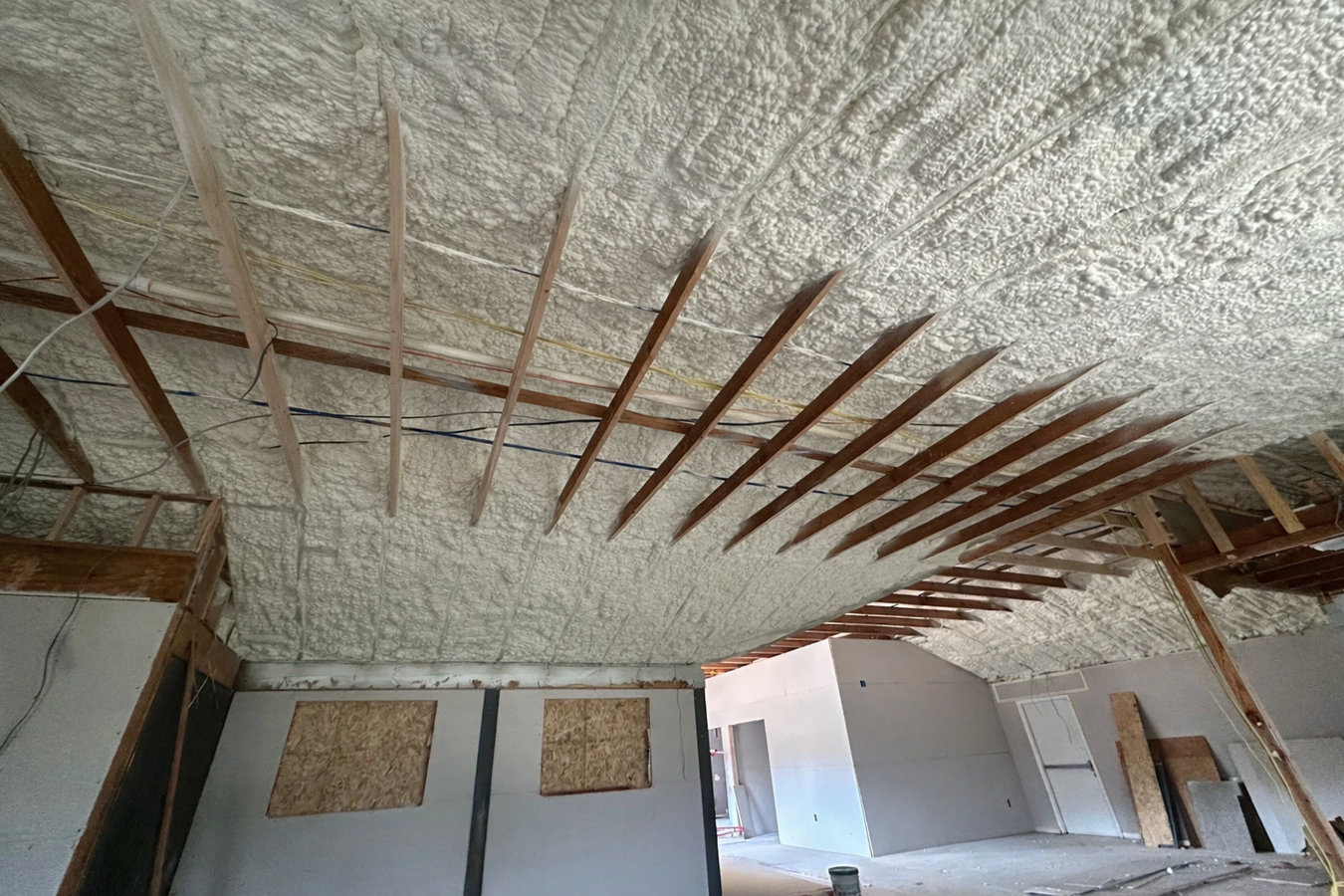
Drafts, cold rooms, and climbing heating bills all point to the same problem. Open-cell foam fills every crack in walls and attics that standard insulation leaves behind.
Open-cell foam insulation in Missoula expands on contact to fill every gap, seam, and irregular cavity in walls and attics - most residential jobs are complete in a single day. Unlike fiberglass batts, which only slow heat movement through solid surfaces, open-cell foam creates a continuous air barrier by expanding up to 100 times its original volume and hardening in place around pipes, wires, and framing that batts simply cannot reach.
In Missoula, where heating season stretches from October through April and older neighborhoods carry a large share of pre-1980 construction, open-cell foam addresses the two problems that older homes face at once - thin insulation and uncontrolled air movement. If you have noticed cold rooms, drafts near baseboards, or heating bills that do not reflect your thermostat setting, those are reliable signals the air barrier has gaps.
Many homes benefit from pairing open-cell foam with attic air sealing - treating walls and the attic floor together creates a tighter thermal envelope than addressing either location alone.
If your gas or electric bill climbs sharply when Missoula's temperature drops and stays high through April, your home is losing heat faster than it should. Under-insulated homes in this climate can cost hundreds of dollars more per year than necessary. If your bills feel out of proportion to your home's size, insulation is one of the first things worth checking.
If a bedroom, corner of the living room, or a room above the garage is consistently colder than the rest of the house, the insulation in that area is thin, missing, or full of gaps. This is especially common in Missoula's older homes, where insulation was often added unevenly over the years or skipped entirely in certain wall cavities.
Hold your hand near an electrical outlet on an exterior wall on a cold day. If you feel cool air, that is outside air leaking in. The same test works near baseboards, window frames, and at the tops of interior doors. These drafts are a sign that your home's air barrier has gaps - open-cell foam is one of the most effective ways to seal them permanently.
Homes built in Missoula before the mid-1980s were constructed under much looser insulation standards than exist today. If you have never had an energy audit or insulation upgrade, your attic, walls, or crawl space are likely significantly under-insulated by current standards. This is one of the most common situations where homeowners see the fastest return on an insulation investment.
We install open-cell foam in interior walls, attic cavities, and any above-grade space where air sealing and thermal performance are the priorities. For projects where moisture resistance matters more than air sealing alone - crawl spaces, rim joists, and below-grade walls - we also offer spray foam insulation using closed-cell material, which is denser and less vapor-permeable than the open-cell version. The right choice depends on where in your home we are working and what problem needs solving first.
Every project starts with a thorough walk-through - we check existing insulation levels, look for obvious air leaks, and measure the areas to be treated. We also coordinate with the City of Missoula Development Services on permit requirements when the scope of work calls for it. Pairing open-cell foam with attic air sealing is a common combination for older Missoula homes that need both the air barrier closed and the insulation layer brought up to current standards.
Best for homes with thin or missing wall insulation - open-cell foam fills the cavity completely and seals every gap around wiring and plumbing.
Suited for homes where finished attic space or cathedral ceilings make blown-in insulation impractical - foam conforms to any rafter shape or spacing.
Open-cell foam absorbs sound as well as heat - a good fit for interior walls between bedrooms, home offices, or shared walls in duplex properties.
For existing finished walls, we can inject foam through small access holes rather than opening the wall - a lower-disruption option for occupied homes.
Missoula's heating season runs nearly six months, with temperatures regularly dropping below zero from November through February. A large share of the city's residential neighborhoods - including the University District, Rattlesnake, and South Hills - were built between the 1940s and 1970s, before modern insulation standards existed. These homes were not designed to be efficient, and most have never had the kind of wall and attic air sealing that open-cell foam provides. When you factor in Montana's long winters, the payback on insulation work tends to come faster here than in milder climates. The U.S. Department of Energy estimates that air sealing and insulation together can cut heating and cooling costs by up to 15 percent in homes with significant leakage.
Missoula's valley geography also creates a secondary benefit that most insulation guides do not mention. The Clark Fork Valley traps air - both cold in winter and wildfire smoke in late summer and fall. A well-sealed home keeps more of that outdoor air where it belongs. We serve homeowners throughout the Missoula valley, including Missoula proper and the Hamilton area. If your home was built before 1985 and has never had foam work done, the walls and attic are worth a look.
Reach out by phone or through our contact form and we will ask a few basic questions - what areas you want insulated, whether your home has existing insulation, and what prompted your concern. You will hear back within 1 business day to schedule an on-site visit.
A technician walks through the areas to be insulated, checks existing conditions, and measures the space. This visit takes 30 to 60 minutes. You will receive a written estimate that spells out the area, thickness, total cost, and timeline - no pressure to sign on the spot.
Clear the work area before installation day - move stored items, cover HVAC equipment and light fixtures. Your contractor will give you a specific prep list. Plan for you, your family, and pets to be out of the home for at least two to four hours.
The crew sprays foam in passes to the correct thickness, trims any excess flush with the framing, and cleans up. Before they pack up, walk through the finished work with them - a good contractor welcomes that inspection and addresses anything that looks uneven on the spot.
No pressure, no obligation. We will come out, walk through your home, and give you a written estimate. You decide what - if anything - to move forward with.
(406) 550-8187You get a written record of the materials installed and the coverage achieved on every foam project. We walk you through the scope and the products before signing anything, so there are no surprises.
Our installers hold training credentials through the Spray Polyurethane Foam Alliance, the national trade body for foam contractors. Proper technique - correct temperature, ratio, and thickness - is what separates foam that performs from foam that fails prematurely.
We have installed open-cell foam in older homes across Missoula's University District, Rattlesnake, and South Hills neighborhoods - homes with irregular framing, older wiring, and the quirks that come with decades of construction. That experience translates to better coverage and fewer surprises on your job.
We give you a specific re-entry window in writing before the crew arrives - not a vague estimate on the day. You will know exactly when it is safe to return, and you will have a full written scope of work so nothing surprises you on installation day.
Every project we complete reflects the installation guidelines set by the Spray Polyurethane Foam Alliance. Recognized industry training and careful technique are what separate foam that performs for decades from foam that fails in the first few years.
Close the gaps above your ceiling that let heat and smoke move freely between your living space and the attic - the step that makes open-cell foam in your walls perform at its best.
Learn moreWhen moisture resistance is the priority - crawl spaces, rim joists, and below-grade walls - closed-cell spray foam offers a denser, vapor-resistant alternative to open-cell.
Learn moreOctober and November bring the biggest rush - homeowners notice their bills and call all at once. Reach out now to lock in your spot and start the first cold winter with a properly sealed home.