Blown-in insulation
Blown-in insulation is the most effective way to fill an existing attic to the right depth - it reaches around joists and odd corners that batts cannot cover completely.
Learn more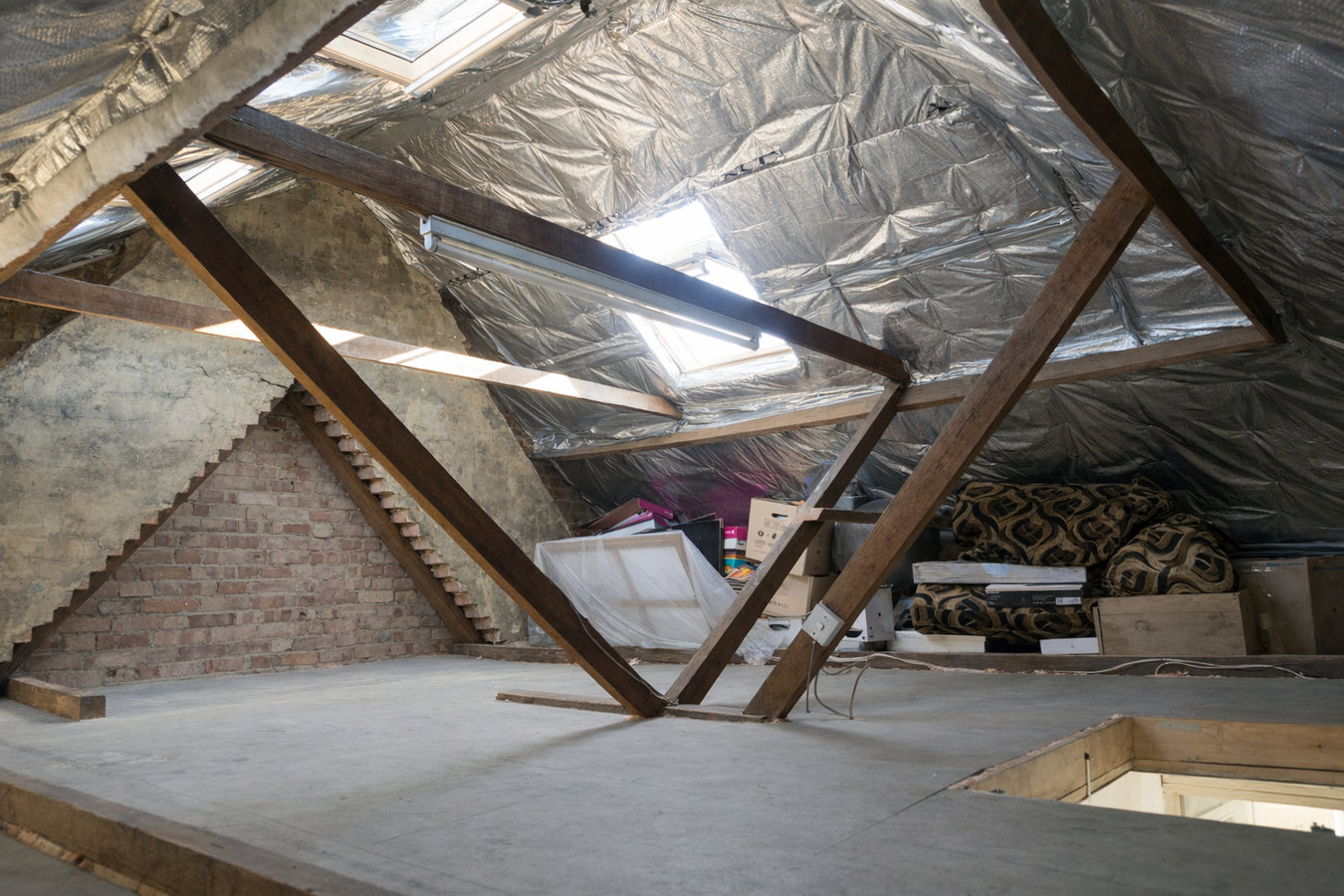
Heat rises, and if your attic is under-insulated, you are paying to warm the outdoors. We install proper attic insulation in Missoula homes so warmth stays where it belongs all winter long.
Attic insulation in Missoula slows heat from escaping through your ceiling in winter and blocks it from baking down into your living space in summer - most standard attic jobs are complete in a single day. The attic is where most homes lose the greatest share of their heat, and in Missoula's climate zone, the recommended insulation depth is higher than most of the country. If you can see your floor joists poking up through the insulation, you are almost certainly under-insulated.
Missoula's older housing stock - particularly the craftsman bungalows and ranch homes throughout the University District and South Hills built in the 1950s and 1960s - was constructed before modern energy codes required meaningful attic insulation. Many of these homes still have the original material, which has settled and compressed over decades. If your home is older and your heating bills feel high, the attic is usually where the problem starts.
Attic insulation works best when paired with attic air sealing. Adding insulation on top of air leaks is like laying a blanket over a screen door - it helps a little, but gaps in the thermal envelope still let heat out. Sealing first, then insulating, is how you get the full benefit.
If your gas or electric bill has crept up over the past few winters - or it is noticeably higher than neighbors in a similar home - your attic is one of the first places to look. Heat rises, and an under-insulated attic is like leaving a window open all winter. In Missoula, where heating season runs nearly six months, even a modest improvement in attic insulation translates to real savings on your NorthWestern Energy bill.
If the rooms closest to your ceiling are noticeably harder to heat in winter or cool in summer, the attic above them is likely the culprit. Heat escapes through the ceiling in winter and radiates down in summer. This is one of the most common complaints homeowners have before getting their attic insulated - and one of the first things that improves afterward.
Ice dams - the ridges that build up at the edge of your roof after a snowfall - are a classic sign that heat is escaping through your attic and melting snow unevenly. Missoula gets enough winter snowfall that ice dams are a real and recurring problem. Left unaddressed, they force water under shingles and cause damage inside walls and ceilings.
If you look through the attic hatch and see the wooden framing beams poking up above the insulation - or the insulation looks thin, patchy, or settled flat - you almost certainly do not have enough. A properly insulated Missoula attic should have material deep enough that you cannot easily see the framing beneath it.
We install both blown-in insulation and batt insulation depending on your attic's framing and condition. Blown-in insulation is the most common choice for existing Missoula attics because it fills around joists, pipes, and irregular corners without leaving gaps. It is installed with a hose from a blowing machine and works well whether you are topping off existing material or starting from scratch. Batt insulation works best in attics with regular framing and clear access - it is pre-cut and laid in place, which makes it a good fit for new construction or attics being finished.
Every attic job starts with air sealing - we identify and seal gaps around light fixtures, plumbing penetrations, and the tops of interior walls before any new insulation goes in. This step is what separates a job that delivers real savings from one that looks complete but still leaks. If your existing material is dry, free of mold, and undisturbed, we can add new blown-in material right on top. If there is moisture damage, rodent activity, or hazardous old material, we address that first, and we leave you with a written record of everything installed.
Best for existing attics - fills around joists and irregular framing with no gaps. The most common upgrade in older Missoula homes.
Best for attics with regular framing in new construction or renovation - pre-cut blankets laid in place for consistent coverage.
Included with every attic job - sealing gaps before insulation goes in is what delivers real energy savings rather than surface improvements.
Needed when there is moisture damage, rodent activity, or old hazardous material. We assess before recommending removal - not all old material needs to come out.
Missoula's valley location means cold air pools and stays during winter inversions, keeping temperatures well below zero for days at a stretch. The federal government places Missoula in one of the coldest climate zones in the lower 48 states, which is why the recommended insulation depth here is significantly higher than in most of the country. An attic that was insulated to standard 20 years ago may be performing far below what Missoula winters actually demand - insulation settles and compresses over time, losing effectiveness even when it looks intact from below. The ENERGY STAR Seal and Insulate program outlines performance thresholds that qualify for federal tax credits - materials we install meet those thresholds.
A leaky attic does not just let heat out - it draws outside air in. Missoula's valley traps winter air quality problems: wood smoke, vehicle exhaust, and cold-air inversions can concentrate outdoor pollutants for days at a time. Sealing and insulating properly keeps more of that outdoor air out of your home. We work throughout the greater Missoula area, including Missoula and Hamilton. If your home is in one of Missoula's older neighborhoods and has never had attic work done, there is a good chance it is well below where it should be for this climate.
We ask about your home's age, what you have noticed - high bills, uncomfortable rooms, ice dams - and schedule a free in-home visit. You will hear back within 1 business day. Demand picks up before the cold season, so early scheduling means more flexibility.
A contractor goes up into the attic, measures what is already there, looks for air leaks, moisture, and any hazardous material concerns. You receive a written estimate breaking down scope and cost - most visits take 30 to 60 minutes.
Clear a path to the attic hatch and empty any closet below it. You do not need to leave your home, but blowing equipment is loud - similar to a shop vacuum running continuously. Most standard attic jobs are complete in a single day.
When the work is done, we clean up, walk you through what was installed, and give you material documentation. Keep that paperwork - it is what you will need to claim the federal energy efficiency tax credit when you file.
We will tell you exactly what is in your attic, what it would cost to fix it, and whether the materials qualify for a federal tax credit. Then the decision is entirely yours.
(406) 550-8187We go into your attic, measure what is there, check for air leaks and moisture, and give you an itemized written quote. You get the full picture before spending a dollar - no pressure, no upsell, just honest numbers.
You get a written record of the materials installed and the coverage achieved on every attic job. Documented work protects you if a question comes up later and keeps your home's record clean when you sell.
We seal air leaks around light fixtures, plumbing penetrations, and wall top plates before any new material goes in. Skipping that step is the most common reason homeowners do not see the energy savings they expected. We do it as part of the job, not as a separate line item you have to ask for.
Over half of Missoula's housing stock was built before 1970. Homes from that era need more prep work - checking for vermiculite, correcting settled insulation, and sealing the kinds of gaps that never existed in newer construction. We have worked across the University District, Rattlesnake, and South Hills neighborhoods and know exactly what older Missoula attics look like.
When you combine properly trained installers, correct material depth for Montana's climate zone, and thorough air sealing, you get results that show up on your NorthWestern Energy bill - not just a contractor's promise. The North American Insulation Manufacturers Association sets industry standards for materials and installation methods - the products we install meet those standards. Choosing the right attic insulation contractor makes the difference between a job that looks done and one that actually performs.
Blown-in insulation is the most effective way to fill an existing attic to the right depth - it reaches around joists and odd corners that batts cannot cover completely.
Learn moreAir sealing targets the gaps in your attic floor that let conditioned air escape and outside air in - done before insulation, it is what makes the full job actually work.
Learn moreWinter is long in Missoula. The sooner your attic is sealed up, the sooner you stop losing heat through the ceiling every night. Call now or send us a message to get started.