Spray foam insulation
Air-sealing spray foam that expands on contact to fill gaps and deliver high R-value performance.
Learn more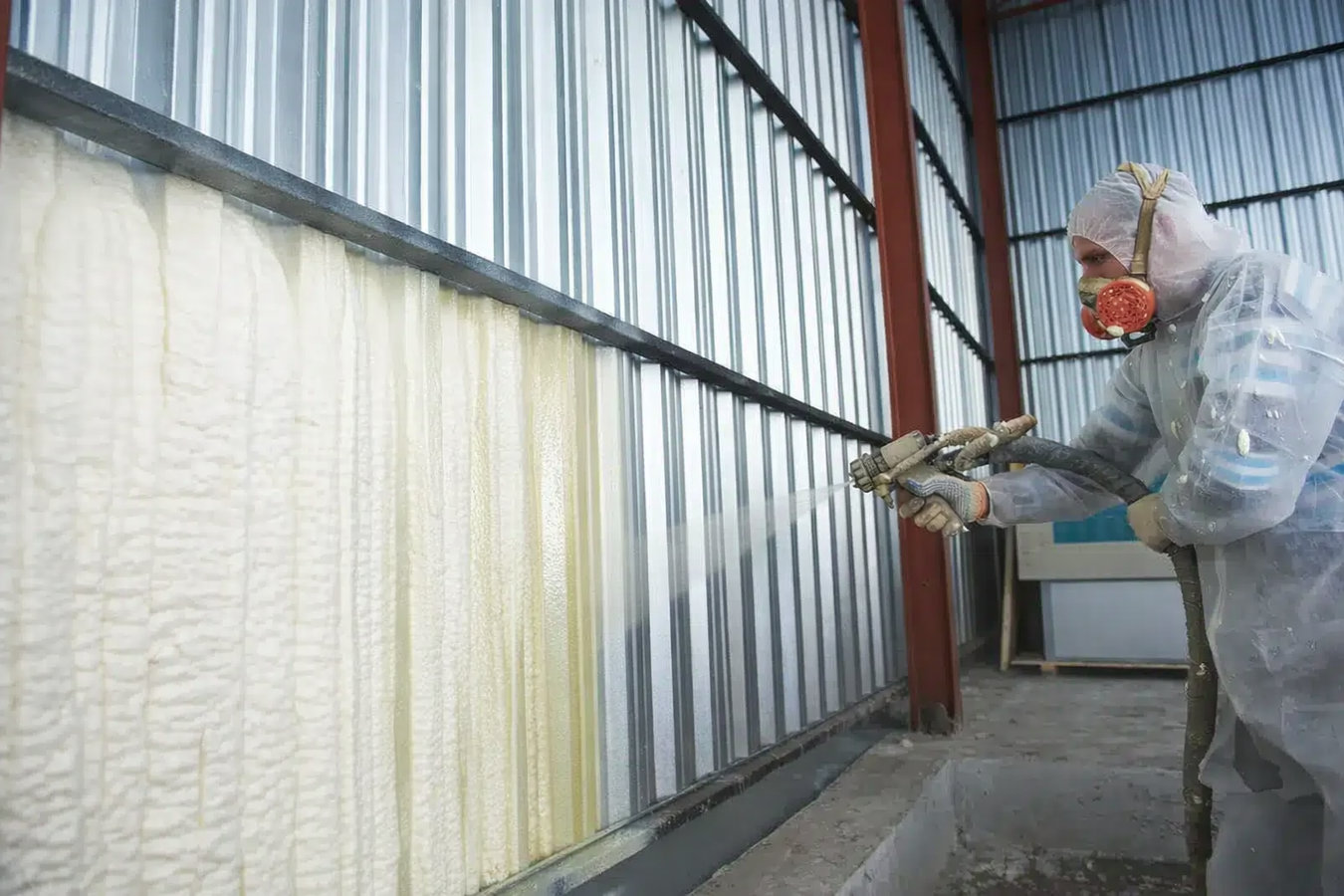
Missoula Insulation provides commercial insulation, attic insulation, and blown-in insulation to Great Falls, MT homes and businesses. We are a locally owned Montana insulation contractor and schedule Great Falls assessments within one business day.
Great Falls has a substantial stock of older commercial buildings - offices, warehouses, and mixed-use properties - many built during the city's mid-20th-century growth years when insulation standards were minimal. A commercial building with poor insulation costs far more to heat in a Montana winter than one that has been properly upgraded. Learn more about our commercial insulation services and how we approach older buildings in Montana's climate.
Great Falls winters regularly drop well below zero, and a poorly insulated attic is the single biggest source of heat loss in most homes. The craftsman bungalows and two-story homes that dominate older Great Falls neighborhoods routinely have attic insulation that has settled or was never installed to current Montana standards - leaving homeowners with high heating bills and ice dams forming at the eaves.
Many older Great Falls homes were built with no wall insulation at all - just wood framing, sheathing, and siding separating interior rooms from Montana winters. Blown-in cellulose or fiberglass fills those cavities through small access holes without requiring you to open finished walls, making it the practical upgrade path for homes that have not been through a full renovation.
Ranch-style homes from the 1960s through the 1980s make up a large share of Great Falls housing, and most have full basements with uninsulated rim joists and concrete walls. Spring snowmelt along the Missouri River can saturate soil quickly, making moisture management in these basements especially important. Rim joist insulation with closed-cell spray foam stops both air infiltration and moisture movement at grade level.
Great Falls is famous for its chinook winds, which can shift temperatures by 30 to 50 degrees in a matter of hours. Those rapid swings open up gaps and joints in the building envelope that mild climates never stress. Air sealing around attic penetrations, rim joists, and wall-to-ceiling transitions stops the convective heat losses that make chinook weather so hard on Great Falls homes.
Homes with crawl space foundations in Great Falls face a difficult combination: deep winter frost below and potential spring moisture from Missouri River snowmelt above. Insulating and encapsulating the crawl space addresses both problems - it stops cold from entering through the floor system and creates a moisture barrier that protects the wood framing and subfloor above.
Great Falls sits in a part of Montana known for some of the most dramatic temperature swings in the country. Chinook winds - warm, dry air masses that flow down from the Rockies - can push temperatures up by 30 to 50 degrees within a few hours, then drop them just as fast when the wind stops. Few buildings in the United States endure that kind of thermal stress repeatedly through a single winter. Average snowfall of around 57 inches per year adds to the picture, keeping roofs loaded and foundations frozen for extended stretches from November through March. Older Great Falls homes, a large share of which were built in the 1920s through the 1950s, were not designed with that kind of thermal cycling in mind.
The Missouri River corridor adds a second pressure that sets Great Falls apart from most Montana cities. Spring snowmelt saturates the ground quickly, and lower-lying properties near the river can see water pooling around foundations and seeping into basements. Homes that lack proper crawl space encapsulation or basement insulation are vulnerable to moisture intrusion every spring. Malmstrom Air Force Base brings steady population turnover to Great Falls, which means a consistent stream of homes being prepared for rent or resale - and buyers expecting homes that perform well, not just look good from the street.
We work on both residential and commercial properties in Great Falls, and the range of building types here is wide. The older craftsman bungalows near downtown, close to the C.M. Russell Museum and the Central Avenue corridor, have original wood framing, older foundations, and decades of patchwork insulation that needs to be assessed correctly before any new material goes in. The ranch-style homes from the 1960s and 1970s scattered through the east side and near Malmstrom AFB are a completely different set of conditions - different foundation types, different rim joist situations, and different access challenges. We understand both.
Great Falls is served by 10th Avenue South and Central Avenue as the main east-west corridors, with most residential neighborhoods fanning out from those roads toward the river and toward the base. Properties near Giant Springs State Park and the river trails tend to see more moisture-related issues in spring; those on the drier west and south sides of town have more straightforward thermal insulation needs. We factor in those differences when we do the on-site assessment.
Great Falls is about 90 miles north of Helena, and we serve homeowners along the US-89 corridor regularly. If you are in the Great Falls area and ready to schedule an assessment, reach out and we will get you on the calendar.
When you reach out, we ask about your home or building, the areas you are concerned about, and what problems you have noticed - high heating costs, cold rooms, or drafts during chinook wind events. We schedule a Great Falls on-site assessment within one business day.
A technician inspects your attic depth, basement rim joists, crawl space condition, and accessible wall areas. You receive a written estimate that itemizes each area, the recommended material, the R-value target, and the total cost. No pressure to decide on the spot - and this is also when we confirm whether a permit is needed for your specific job.
Most Great Falls attic and basement insulation jobs are completed in a single day. Air sealing happens first, then insulation goes in. For spray foam projects, you will step away from the treated area for two to four hours while the foam cures; for blown-in and batt work, you can stay in the home throughout.
Before leaving, we walk through the work with you, confirm insulation meets the specified R-values, and clean up. We provide written documentation of what was installed - useful for federal energy efficiency tax credits, for insurance purposes if insulation was damaged by a covered event, and for future buyers if you sell.
We serve homeowners and businesses in Great Falls, MT and respond within one business day. No commitment required for the on-site assessment.
(406) 550-8187Great Falls is Montana's third-largest city, with around 60,000 residents, and sits along the Missouri River in Cascade County. The city grew quickly in the early 20th century, and that history is visible in the housing stock - craftsman bungalows and two-story homes from the 1910s through the 1940s fill the older neighborhoods near downtown and along the riverfront. Farther from the core, ranch-style homes from the 1960s and 1970s dominate, and newer subdivisions have filled in around the city's edges in more recent decades. Malmstrom Air Force Base on the east side of town is one of the city's largest employers, and the steady turnover of military families keeps the housing market active and the demand for well-maintained, efficient homes consistent.
The Missouri River is central to Great Falls life - trails along the river connect neighborhoods, and the waterfalls the city is named for draw visitors to the area near Giant Springs. Homes close to the river are beautiful, but they also see more spring moisture as snowmelt raises the water table. Insulation and moisture control in those properties are a more complex job than in homes on the drier west side of town. We serve the whole Great Falls area, from the older blocks near Central Avenue to the newer homes on the city's edges. We also work regularly in Helena to the south, where similar older-housing-stock challenges apply in Montana's capital city.
Air-sealing spray foam that expands on contact to fill gaps and deliver high R-value performance.
Learn moreProper attic insulation to reduce heat loss, lower energy bills, and improve year-round comfort.
Learn moreLoose-fill blown-in insulation that conforms to irregular spaces for complete, even coverage.
Learn moreWhole-home insulation solutions tailored to Montana's climate for maximum energy efficiency.
Learn moreSafe removal of old or damaged insulation before replacement or renovation work begins.
Learn moreCrawl space insulation that controls moisture, prevents freezing pipes, and improves floor comfort.
Learn moreInterior and exterior wall insulation to reduce drafts and improve thermal performance.
Learn moreProfessional air sealing to eliminate drafts, reduce energy waste, and improve indoor air quality.
Learn moreBasement insulation that reduces heat loss through foundation walls and creates usable living space.
Learn moreDense closed-cell spray foam providing the highest R-value per inch plus a vapor barrier in one step.
Learn moreFlexible open-cell foam that fills cavities, reduces sound transmission, and seals air leaks.
Learn moreTargeted attic air sealing to stop conditioned air from escaping through the ceiling plane.
Learn moreHeavy-duty vapor barrier installation to protect crawl spaces from moisture intrusion and mold.
Learn moreFull vapor barrier installation services for crawl spaces, basements, and below-grade areas.
Learn moreRetrofit insulation upgrades for existing homes to meet current energy codes and comfort standards.
Learn moreCommercial insulation for warehouses, office buildings, and industrial facilities across Montana.
Learn moreServing these cities and communities.
Call us or submit a request online and we will schedule your free Great Falls insulation assessment within one business day.